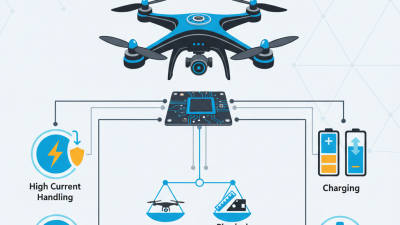
So, firefighting drone BMS tech is turning into a pretty practical safety layer for aerial emergency ops. Picture drones flying over burning warehouses, forests, or industrial sites, carrying thermal cameras, radios, and even water systems. Their batteries deal with vibration, heat, fast discharge, and sudden spikes in power demand. That's where a solid Battery Management System comes in—it watches those risks in real time.
The National Fire Protection Association counted about 1.5 million fires in the U.S. back in 2022. Every one of those incidents can put crews and aircraft in dangerous spots. A drone can give you valuable eyes on the scene before firefighters go into a smoke-filled building. But here's the catch: its usefulness really depends on stable power. The BMS measures cell voltage, current, temperature, state of charge, and state of health. It can balance cells, estimate remaining flight time, and cut off the pack if something goes badly wrong. Small stuff matters, too. One damaged connector can end a mission.
The International Energy Agency's Global EV Outlook 2024 points to how important battery safety, thermal control, and lifecycle monitoring are across electrified transport. Those ideas apply to firefighting drones as well, even though the operating conditions are different. A BMS has to react quickly without throwing false alarms during intense maneuvers. It should talk to the flight controller and give operators clear warnings. Standards like IEC 62133-2 and UL 2580 are helpful safety references, but no standard wipes out every engineering uncertainty. That assumption deserves a closer look. This guide digs into what a firefighting drone BMS does, how its protection logic works, and why sensor accuracy, thermal management, and maintenance records shape real-world reliability.

Firefighting Drone BMS: Definition and Core Purpose
A firefighting drone BMS, or Battery Management System, is the battery’s safety and control center. It measures cell voltage, current, temperature, charge level, and charging status. It also balances individual cells, preventing one weak cell from limiting the entire pack. In practice, the system may reduce power when heat rises near a fire scene. That response protects the battery, drone, and nearby crews.
The need is practical.
NFPA’s Fire Loss in the United States During 2022 reported 1,504,500 fires attended by U.S. fire departments. A drone can inspect smoke, roofs, tanks, or hot zones without placing a firefighter immediately in danger. Yet its battery faces vibration, rapid discharge, repeated charging, and high ambient temperatures. The BMS records these stresses and can transmit warnings, such as abnormal temperature or sudden voltage imbalance, to the operator.
Small details matter.
A reliable BMS should use temperature sensors across the pack, not only one sensor near the controller. It should also retain fault history for maintenance reviews. UL Research Institutes has highlighted thermal runaway as a serious battery safety concern in technical fire research. However, BMS protection is not magic. Sensor placement can be imperfect, and delayed data may mislead operators. Field teams should compare telemetry with battery condition, flight time, and visible damage. Sometimes, replacement is wiser than another mission.
Key Components of a Firefighting Drone Battery Management System
What Is a Firefighting Drone BMS and How Does It Work?
Key Components of a Firefighting Drone Battery Management System
A firefighting drone BMS monitors every battery cell during flight. Its voltage sensors detect imbalance, while temperature sensors watch hot spots near connectors. A current sensor measures energy flow during lifting, hovering, and rapid acceleration. The controller then estimates state of charge and state of health. These readings help prevent overcharging, deep discharge, and unsafe operating temperatures.
The IEA’s Global EV Outlook 2024 reported that global lithium-ion battery demand reached about 750 GWh in 2023. Drone packs are smaller, but they face sharper power changes and vibration. Therefore, a reliable BMS needs cell balancing, fault logging, communication, and emergency shutdown control. Power contactors can isolate the pack after a serious fault. Thermal protection adds another safety layer, although it cannot remove every risk. No BMS is perfect.
Tips: Inspect temperature history after each mission, not only the remaining charge. Calibrate sensors regularly and check loose terminals, crushed cables, or swollen cells. Keep batteries within the manufacturer’s tested temperature range. A practical field test should include a short hover with a measured payload. That detail matters. A displayed 40% charge may still hide weak cells, ageing resistance, or inaccurate calibration. BMS software should also record voltage spread, peak current, and shutdown events for qualified maintenance reviews.
How the BMS Monitors Battery Health and Operating Conditions
A firefighting drone BMS acts like a quiet flight engineer inside the battery pack. It samples cell voltage, pack current, temperature, and charge level many times per second. During hover, heat can build quickly near the motors and battery enclosure. The BMS compares these readings with safe operating limits, then reduces power or disconnects the pack when danger rises. It also estimates state of health by tracking capacity loss, internal resistance, cycle count, and voltage imbalance.
Small differences matter.
A 2024 International Energy Agency report states that global lithium-ion battery demand exceeded 750 GWh in 2023, increasing pressure for better monitoring and safer thermal management. For firefighting drones, the BMS should record event data, not only display remaining percentage. A sudden voltage drop under heavy lift may reveal a weak cell before the pilot sees a warning. Temperature sensors near cell groups can also identify uneven heating, especially after repeated launches in hot, smoky environments. IEC 62133-2 and UN 38.3 testing provide important safety references for rechargeable lithium batteries, but certification does not guarantee safe field operation.
The difficult part is prediction. A BMS may report 40% capacity while aging, cold weather, or high current makes that estimate optimistic. That weakness deserves attention. Operators should review voltage spread, temperature peaks, charging history, and post-flight alarms after every mission. Redundant sensors help, though they add weight and possible failure points. Reliable maintenance records remain essential when a drone must climb quickly, carry thermal equipment, and return through turbulent air.
What Is a Firefighting Drone BMS and How Does It Work?
How the BMS Monitors Battery Health and Operating Conditions
A Battery Management System continuously tracks state of charge, cell temperature, and cell voltage. During a high-load firefighting mission, rising temperature and falling voltage can trigger balancing, power limiting, or a return-to-home warning before the battery reaches unsafe operating conditions.
Safety Protections Against Overheating, Overcharging, and Short Circuits
A firefighting drone BMS is the battery’s safety controller.
It monitors cell voltage, current, temperature, and charging status in real time. During flight, sensors can detect a hot cell before it becomes a serious threat. The controller then reduces power or disconnects the battery through electronic switches.
Small details matter. A loose connector can create dangerous resistance and heat.
Overcharging is controlled by voltage limits and cell balancing.
Balancing prevents one cell from rising above the others during charging. Short-circuit protection reacts within milliseconds by stopping current flow. Temperature thresholds also trigger alarms, power reduction, or shutdown.
The U.S. Consumer Product Safety Commission reported more than 25,000 lithium-ion battery overheating or fire incidents from 2016 to 2020.
Firefighting drones operate near flames, so their batteries face harsher conditions than ordinary aerial systems.
Thermal runaway remains the difficult failure.
UL Research Institutes reports that lithium-ion cells can exceed 600°C during this event and release flammable gases. A BMS cannot extinguish every battery fire. It only limits the conditions that help failure spread.
Practical systems need insulated packs, physical fuses, protected wiring, and temperature sensors placed near vulnerable cells.
Sensor drift is possible. Software can also misjudge a damaged pack. That weakness deserves regular inspection, realistic heat testing, and clear maintenance records.
Power Management During Flight and Firefighting Operations
What Is a Firefighting Drone BMS and How Does It Work?
A firefighting drone BMS manages battery power during flight and emergency operations. It continuously measures cell voltage, current, temperature, and remaining capacity. During hover, pumps, cameras, and thermal sensors may draw power simultaneously. The BMS balances these demands and prevents dangerous over-discharge. It also estimates flight time from real operating conditions, not laboratory figures. That difference matters.
Firefighting creates harsher loads than ordinary inspection flights. Water tanks increase weight, while hovering near heat raises cell temperature. The BMS can reduce output, trigger alarms, or disconnect a damaged battery section. It must react quickly, but not too aggressively. A sudden shutdown could create a different operational hazard.
The FDNY’s 2022 Lithium-Ion Battery Report recorded
216 battery fires,
six deaths, and
147 injuries.
Those incidents were not drone-specific, but they show why thermal monitoring cannot be treated as a minor feature.
A reliable system records temperature peaks, voltage imbalance, discharge rates, and abnormal charging behavior. Maintenance teams can review these logs after every mission.
The IEA’s Global EV Outlook 2024 reported a 14% decrease in lithium-ion battery pack prices during 2023.
Lower costs may support larger packs, but they do not remove thermal risks. Energy calculations still contain uncertainty. Heat wins quickly.
A better BMS combines conservative limits, redundant sensors, and field-tested software. Even then, sensor failure remains possible, so operators should question optimistic flight-time estimates.
How BMS Data Supports Maintenance and Mission Planning
A firefighting drone BMS, or battery management system, monitors the battery during demanding aerial work. It records cell voltage, temperature, current, charge level, and battery health. It also balances cells to reduce uneven stress. During a hot inspection near a burning structure, this data can reveal rising temperature before the aircraft reports a critical warning. Small changes matter.
Maintenance teams can use BMS records to identify repeated overheating, deep discharges, or unusual voltage differences. These patterns help technicians inspect connectors, cooling paths, and individual battery modules. Cycle counts also support replacement planning. A battery may still show a high charge level but have reduced capacity. That difference is easy to miss. Yet BMS data is not perfect. Sensors can drift, and incomplete logs may create false confidence. Manual inspections remain necessary.
Mission planners can combine battery health with payload weight, wind, flight distance, and expected hovering time. A drone carrying a thermal camera may need less energy than one carrying a heavier suppression load. The BMS can provide an estimated reserve, but planners should keep a safety margin. A cold battery can deliver less power than its displayed percentage suggests. Data from previous flights can improve route timing and landing decisions. Still, one abnormal reading should not automatically cancel a mission. It should trigger verification, a second battery check, and a clear operational decision.
How the EF-007 12S 120A Smart BMS Enhances Inspection UAV Battery Safety and Performance
As commercial and inspection drone fleets expand, battery safety is becoming a measurable operational priority. The FAA’s 2024 aerospace forecast reports more than 850,000 registered civil drones in the United States, increasing the need for dependable power-management systems. Built for 12S 44.4V LiPo packs, the EF-007 Smart BMS supports continuous monitoring of cell voltage, pack current, temperature, state of charge, and fault status, giving operators clearer insight before and during each mission.
Its 120A continuous rating is suited to demanding inspection UAVs that require high current during takeoff, rapid maneuvering, or payload operation. Configurable overvoltage, undervoltage, overcurrent, short-circuit, and thermal protections help reduce risks associated with cell imbalance, excessive discharge, and abnormal charging. This is particularly important because international lithium-battery transport guidance limits standalone lithium-ion batteries shipped by air to 30% state of charge, highlighting the importance of controlled battery conditions throughout handling and logistics.
CAN, UART, and RS485 communication interfaces allow the BMS to exchange telemetry with flight controllers, ground systems, chargers, or onboard computers. Real-time alerts can support preventive maintenance by identifying rising temperature, abnormal voltage deviation, or declining capacity before these conditions affect flight reliability. For inspection teams, this combination of configurable protection, high-current capability, and accessible data communication helps improve battery utilization, maintenance planning, and mission-level safety.
FAQS
It is the battery’s safety and control center. It monitors voltage, current, temperature, charging, and remaining capacity. It also balances individual cells. The goal is safer, steadier flight.
Fire scenes create heat, vibration, smoke, and sudden power demands. The BMS helps detect unsafe battery conditions during inspection flights. It may reduce power when temperatures rise. That can protect the drone and nearby crews.
It measures each cell’s voltage and tracks temperature across the battery pack. Current sensors measure energy during lifting, hovering, and acceleration. The system also estimates charge level and battery health. These estimates can be imperfect.
Cell balancing prevents one weak cell from limiting the entire battery pack. It reduces voltage differences between cells during charging and operation. A balanced pack can provide more consistent performance. Balance is helpful, not miraculous.
The BMS may report high temperature, voltage imbalance, excessive current, or sudden shutdowns. It can send alerts through the drone’s communication system. Operators should compare warnings with flight time and visible battery damage. Telemetry alone is not enough.
Sensors should cover several areas of the battery pack. Important locations include cells, connectors, and high-current terminals. One sensor near the controller may miss a hot spot. Sensor placement can still be imperfect.
Review temperature history, peak current, voltage spread, and shutdown events. Check for loose terminals, crushed cables, swelling, or damaged insulation. A short hover with a measured payload can reveal weak performance. Do not inspect only the displayed charge.
No. It cannot remove every risk, especially during severe heat or physical damage. Delayed data and inaccurate sensors may mislead operators. Sometimes, replacement is wiser than another mission. That decision deserves careful review.
A displayed 40% charge may hide ageing cells or increased internal resistance. Calibration errors can also distort the estimate. A battery may appear ready but lose power quickly. That assumption needs checking.
Conclusion
A Firefighting Drone Bms is an intelligent control system that manages the battery pack powering a drone during demanding emergency missions. Its core purpose is to maintain reliable energy delivery while protecting the cells from unsafe conditions. The system typically includes voltage and temperature sensors, current measurement circuits, cell-balancing functions, a central controller, and communication interfaces. Together, these components track battery health, charge level, power consumption, and operating conditions in real time.
During flight and firefighting operations, the BMS adjusts power management according to propulsion needs, payload demands, and changing mission conditions. It can warn operators about low energy, overheating, overcharging, excessive discharge, abnormal voltage, and short-circuit risks, while activating protective responses when necessary. By recording charging cycles, temperature history, performance changes, and fault events, the BMS also supports routine maintenance and helps teams plan missions more effectively. This information allows operators to estimate usable flight time, identify batteries requiring attention, and reduce the chance of unexpected power loss during critical operations.